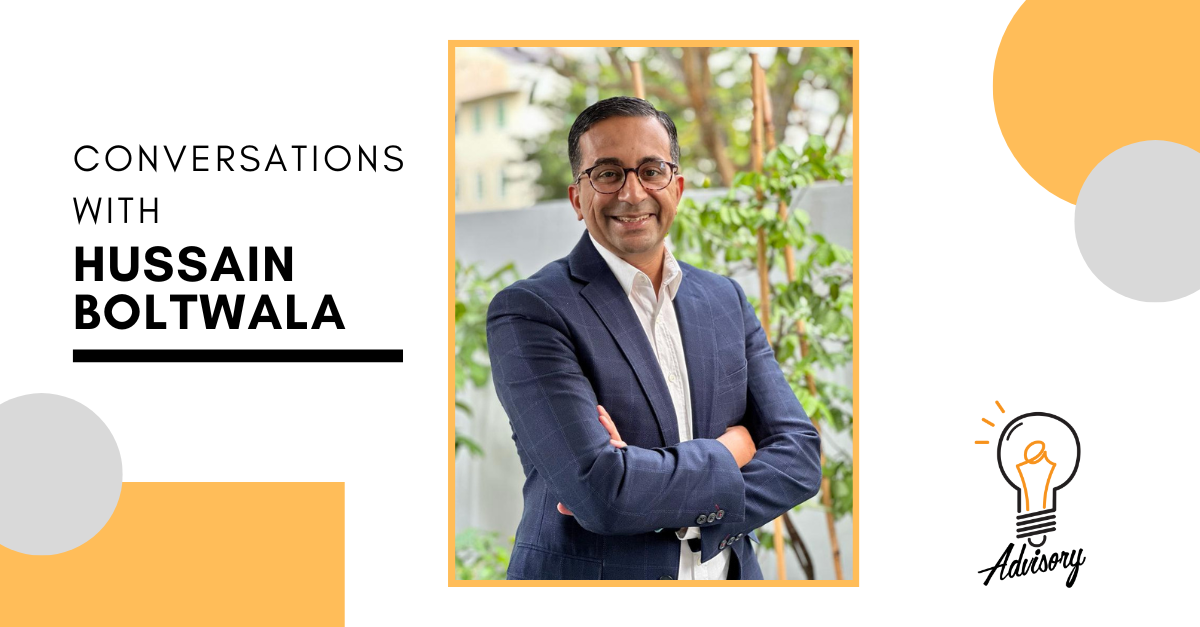
Conversations with Ashley Thomas

By Tan Beng Yang and Adriale Pang
Ashley Thomas is currently Head of Strategy & Operations at Revolut (Singapore). Ashley’s wide-ranging career spans tech and management consulting, as well as financial services. Ashley received her Bachelor of Technology (B.Tech.) in Electronics and Communications Engineering from National Institute of Technology Karnataka. Ashley also studied in France, where she earned her MBA from INSEAD.
What is something about Revolut that you wish more people knew?
Most people know us for our multi-currency travel app, which is one of our strong value propositions. However, there is so much more to Revolut. Revolut is a financial super-app, which provides many tools that make personal finance easier for our customers. For example, we offer a budgeting tool, to help with keeping track of your expenses. We also believe in instilling financial literacy from a young age and offer a Kids & Teens account for everyone aged 6-17 years old.
Additionally, Revolut offers investment products like stocks and commodities on its platform. Going back to our travel offerings, beyond our multi-currency card, we also offer e-sims — in less than a minute, you can activate an e-sim via the Revolut app. Both our e-sims and multi-currency cards make travelling more seamless.
How does Revolut compete with traditional banks?
For each of our products, we compete with a slightly different set of players. In areas like payments and foreign exchange, our competitors include traditional banks as well as other fintech companies
Today, many traditional banks offer multi-currency cards. However, these often come with foreign exchange (FX) markups of around 3% to 5%, which can be costly for customers. In contrast, Revolut offers highly competitive exchange rates and transparent pricing, without hidden fees. A key reason we are able to keep costs low is because we are a digital-first company. Without the overhead of large branch networks and legacy infrastructure, our operating model is significantly more efficient. We pass these cost efficiencies directly to our customers through lower fees and better pricing.
Traditional banks often rely on legacy systems that can make it difficult to innovate quickly or operate with the same level of efficiency as modern digital platforms. Revolut is in a unique position because we combine the credibility of traditionally recognised licences with the agility of a technology-driven company. Another important factor is our strong focus on building products in-house whenever possible. By owning more of our technology stack, we can innovate faster, optimize our systems, and maintain tighter control over costs. These effic
More broadly, fintech companies and digital banks have been growing significantly faster than many traditional institutions, and they continue to gain market share in many markets. Revolut, for example, has already established a strong presence in markets across the UK and Europe. That said, financial services are fundamentally built on trust. Customers are entrusting companies with their hard-earned money, so trust is essential. Ultimately, the institutions that combine innovation, strong customer experience, and deep customer trust will be the ones that succeed—regardless of whether they are traditional banks, digital banks, or fintech companies. iency gains ultimately benefit our customers.
Tell us more about the team that you lead in Revolut.
I joined Revolut more than 4 years ago, and I lead a team called “Strategy & Operations”. My team is the connective tissue that helps Revolut execute its global strategy. We work on Revolut’s workflow, product launches, and regulatory initiatives. For example, in Singapore, we launched cryptocurrency trading, remittance products, and specialised business accounts for SMEs (small and medium-sized enterprises).
What does a day at work look like for you?
Beyond the day-to-day key performance indicators (KPIs) that I am responsible for delivering, a large part of my day is spent working closely with my team. This includes brainstorming ideas, coaching team members, and helping to unblock any issues they may encounter in their work. I often find myself switching between focusing on the bigger strategic picture and diving into the finer operational details.
No two days are exactly the same. Because Revolut operates in the fast-moving fintech industry, we are constantly building new products, testing ideas, and tackling new challenges. That dynamic environment keeps the work interesting and ensures that I am continually learning and being challenged.
My team is relatively small and lean, which means we work very closely together. Unlike in more traditional organisations where employees may operate largely within their own silos, at Revolut collaboration is essential. Team members regularly step outside their immediate responsibilities to support one another, and there is a strong sense that we are all moving in the same direction. That shared ownership makes the experience both rewarding and enjoyable.
Compared with traditional banks, one of the biggest differences is the speed and agility of decision-making. While there are still processes and governance standards to follow, things tend to move much faster. Teams are lean, and individuals are empowered to make decisions within their areas of responsibility.
There is also a strong culture of ownership. One of our mantras is to “get it done”, which means taking responsibility for driving work forward and seeing projects through from start to finish. This applies even to more junior employees, who are trusted to make decisions within their scope.
At the same time, there is an understanding that mistakes can happen, particularly in a fast-moving technology company. What matters most is learning quickly, improving, and moving forward. Revolut looks for people who share these values — individuals who take ownership, move fast, and are willing to drive projects end-to-end. This mindset has been a key factor in helping the company grow and innovate.
What led you to join Revolut?
I have always been fascinated by the world of financial services. After completing my undergraduate studies in engineering, I started working in financial services, followed by tech strategy and management consulting. With this mix of experiences, I realised that I was very keen to be in the digital banking and fintech space. Revolut is a company I have admired for a long time. Back in 2017, when I was doing my MBA in France, I came across Revolut for the first time. My INSEAD classmates showed me how they used their cards and apps, which intrigued me.
Personally, I was looking for a work environment that gave me learning opportunities. Learning drives me and motivates me. This is exactly what I got at Revolut. Every day is different. I learn something new daily, perhaps every hour. This is highly motivating and keeps me going. The fintech industry is still young, so people are still building new products every day. There are many learning opportunities. For example, cryptocurrencies did not exist just a few years ago, nor did embedded finance. Fintech continues to be a space where breakthrough inventions emerge. Correspondingly, you are challenged to learn new things constantly, which is stimulating and rewarding.
In what ways does your university education help you with your work?
Although it has been some time since I graduated, I remain a strong believer in the value of a university education because it played a significant role in shaping the way I think and work today.
University education gives you two things. Firstly, it gives you fundamental technical skills across different topics. It prepares you for the future, by giving you the discipline and rigour you need. These fundamentals are valuable regardless of the industry you eventually work in, because they teach you how to think critically, structure problems, and find solutions. Secondly, university challenges you in ways that go beyond academics. You are surrounded by talented people from different backgrounds, cultures and nationalities. Through group projects, discussions, and shared experiences, you learn how to collaborate, communicate, and work effectively with others. In many ways, university life provides an early glimpse of what working in the real world is like.
This has been particularly relevant in my work today. At Revolut, we collaborate with colleagues across regions - including the UK, India, Australia, Latin America, and more. Being able to work effectively in global teams requires openness, adaptability, and strong communication skills, and university was one of the first environments where I developed those abilities. I went on to pursue two Master’s Degrees after my Bachelor’s Degree because I am of the view that education at the Master’s level is still valuable, even though this may not be a fashionable opinion today.
My engineering background, in particular, has been very useful. Engineering trains you in logical thinking, analytical thinking, being comfortable with data, and using data to make decisions. These are highly transferable skills that can give you an advantage in fields such as fintech, management consulting, and banking. While an engineering graduate may not initially understand how a bank operates, the fundamentals of finance can always be learned along the way. The analytical mindset developed through engineering, however, remains a lasting asset.
To succeed in a highly-global workplace, what skills are important?
I have lived, studied, and worked in several countries. Singapore is unique because workplaces here bring together people from many nationalities within the same office. That multicultural environment makes it relatively easier to adapt to working across cultures. That said, the skills that are important can vary, depending on the stage of your career you are at.
Early in your career, technical and analytical skills tend to be especially important. Much of my own career has been in analytical roles, where decisions are driven by data. Whether in banking or consulting, it is important to know how to work with data, interpret it accurately, and communicate insights clearly. Strong problem-solving abilities and the willingness to brainstorm and explore different solutions are also essential at this stage. Later on in your career, people management and stakeholder management skills become increasingly important. Leading teams, aligning different stakeholders, and navigating competing priorities become a larger part of the role.
In a cross-functional and international team, empathy is a particularly valuable skill. You have to learn to accept that other people are going to be different from you. You need to find out what they care about, including their goals, KPIs and constraints, so that you can find common ground.
Even in a world increasingly shaped by technology and artificial intelligence, work is still fundamentally about people. The ability to shift from an “I” mindset to a “we” mindset — focusing on shared goals rather than individual perspectives — can make a significant difference when working in diverse global teams.
How has AI affected your industry?
Thus far, we have observed that AI helps to automate some tasks, which enables people to spend time on more strategic and value-adding tasks. The second positive impact from AI is accelerating the speed at which new products can be brought to market. AI is also helping with detecting scams and fraud, which are big concerns for the financial sector. At Revolut, we are also developing our own AI models to enhance our products and services. These technologies help us improve efficiency internally while also creating new capabilities for customers.
More broadly, fintech companies and digital banks were founded with the goal of making financial services faster and more convenient for consumers. Traditionally, many banking tasks required customers to visit a physical branch and spend significant time completing administrative processes. Digital-first platforms changed that model by allowing people to open accounts, receive cards, and manage financial products entirely through an app.
Because convenience has always been a core priority, AI is a natural extension of that mission. Looking ahead, we are likely to see AI enable even more personalised financial services — from tailored financial insights and customised rates to faster, more responsive support. Ultimately, AI has the potential to give customers greater control over their finances while making financial services more efficient and accessible.
After your engineering degree, why did you pursue financial services?
The first three years of my Electronics and Communications Engineering undergraduate studies were very academically challenging. Hence, when I entered my fourth year, I wanted to venture out of engineering slightly, to explore something different and broaden my perspective. Fortunately, my university allowed me to take electives in the Economics Department and MBA Department. I really enjoyed those modules that I took. This was a turning point for me.
Engineering is all about numbers. In contrast, the world of financial services seemed more relatable, because it allowed me to see the world beyond numbers. After graduating, I spoke with several bankers I met early in my career. Many of them advised that if I wanted to move into investment banking, it would be helpful to pursue an MBA with a focus on finance. Taking their advice, I went on to complete an MBA and also pursued the Chartered Financial Analyst (CFA) certification.
How do you achieve work-life balance?
Work-life balance is a very personal matter, because each of our needs are different. Every individual needs to figure out what they need, and what is their personal definition of work-life balance.
It is also helpful to keep a broader perspective. Working cultures differ across countries, and some places naturally have longer or shorter working hours. Understanding how your working environment compares with global norms can sometimes help put things into context. Work-life balance also depends on which stage of your career journey you are in. In the earlier part of my career, my life mostly revolved around work, and I was happy with that. I was given projects and opportunities, and I was learning tremendously. However, that was my personal definition of work-life balance, at that point in time.
I started my career with a more intense tempo. Someone else might want to do the exact opposite — start their career slower, then gradually increase their tempo. Additionally, I encourage you to consistently discuss your expectations regarding work-life balance, with your manager and your team. Before the interview, during the interview, and even after joining the company, it is important to have conversations about these expectations. Communication helps you find common ground with your manager and your team. Together, your team might be able to make adjustments to better accommodate each other’s unique circumstances.
How should a youth choose between joining the public, private or people sector?
I do not have extensive personal experience working in the public or non-profit sectors, so my perspective is somewhat that of an outsider. However, I believe each sector plays an important and complementary role in society.
The public sector, in particular, carries a significant responsibility because it focuses on serving the nation and the broader public interest. From what I observe, working in the public sector often requires a different mindset. Policymakers and public servants need to think about long-term outcomes — sometimes planning 20 to 30 years into the future. Their decisions shape national policies, infrastructure, and social systems that affect millions of people and businesses.
In contrast, the private sector typically operates with shorter-term goals and performance cycles. Companies often focus on delivering results within months or a few years, responding quickly to market conditions, competition, and customer needs.
The people sector, including non-profit organisations, is often driven by social impact and community needs. Individuals working in this space are usually motivated by the opportunity to make a direct difference in specific causes or communities.
Ultimately, choosing between these sectors depends on what motivates you and what kind of impact you want to have.
What hobbies do you pursue outside of work?
I play tennis and badminton. Lately, I have also picked up pickleball. I used to go cycling, to exercise and get some fresh air, but I do not cycle too much these days. Singapore is pretty great because there is a lot of space outside for people to exercise. This is one of the best perks of living here.
Do you have any advice for youths who are navigating their education and career pathways?
When you go for a job interview, the hiring managers are often thinking about the following questions: Are you a good cultural fit? Do you have skills matching the job description? And if not, do you have the ability to gain those skills quickly and grow into the role?
Both hard skills and soft skills are important, because one task might require more technical skills, but another task on the same day might require more soft skills. Keep learning, and always be curious. Do not stop your learning at any age. Ask yourself tough questions: why is something working this way? Keep your eyes open.
University education can also play an important role in helping you discover the fields or sectors that interest you. Ideally, you should have a vision about what you want to do and then decide your university education accordingly. That said, it is possible that midway through university, you realise that you want to switch tracks. While this will require more hard work, as long as you are committed, switching tracks is not necessarily a mistake. It is alright to take risks, experiment and see what works for you.
One thing I would have done differently is that I would have looked for mentors when I was younger. Having a mentor is such a privilege. They can help you and guide you so that you can avoid some common pitfalls. Of course, mistakes are still part of the learning process. What matters is being willing to put in the effort, reflect on what went wrong, and continue learning and improving.