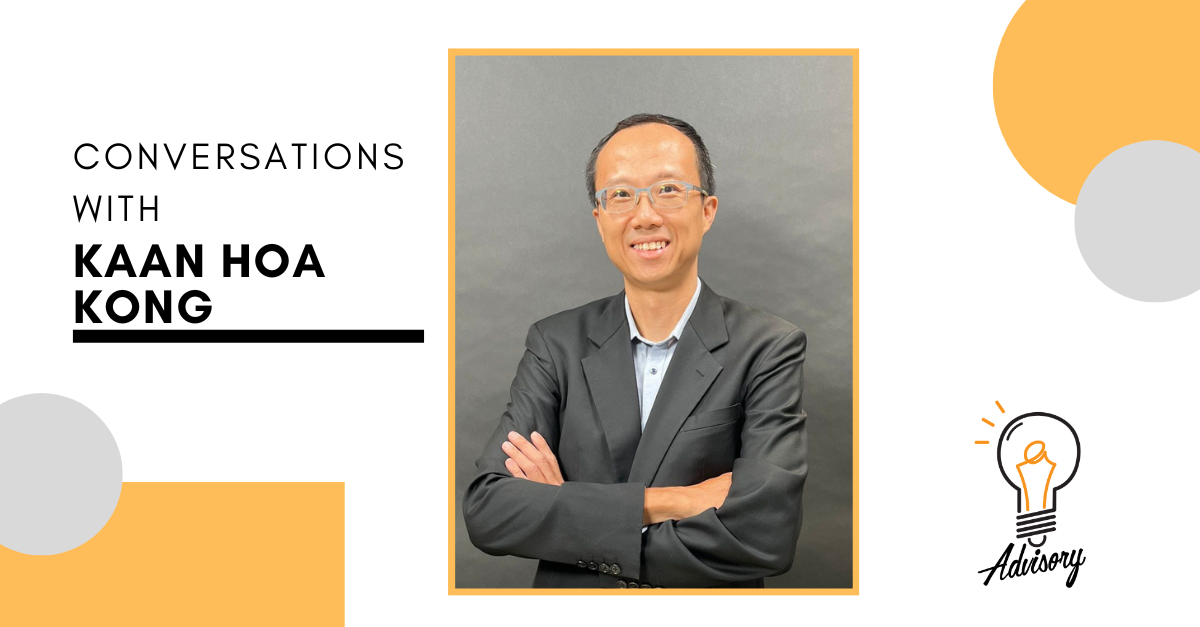
Conversations with Jason Low

By Tan Beng Yang and Kayla Kam
Jason Low is the Southeast Asia equity research lead at Bloomberg Intelligence (BI). Prior to joining Bloomberg, he spent 20 years at GIC as portfolio manager and deal lead in Japanese equities.
Could you give a brief introduction of yourself and your job?
As the Southeast Asia equity lead at Bloomberg Intelligence, I focus on equities research in the region. I analyse companies in the region, generate insights and publish research for clients on the Bloomberg Terminal, which is an integrated proprietary solution used by finance professionals to seamlessly collate data and make investment decisions.
What does your day-to-day life look like?
Most of my day revolves around following the news, conducting deep research and coordinating with my colleagues to produce quality analysis to publish. If a company I cover announces a major deal, I will attend the investor calls, analyse management commentary and quickly publish my views. Beyond that, I frequently travel for conferences, company meetings and speak at events. The hours can be long as my evenings are spent writing reports on events from the day. We also work very closely with other internal teams, as we often collaborate so as to write more insightful reports.
Could you walk us through your career path so far?
I studied at Tokyo University and thereafter began my career as a Japan equities research analyst, then became a portfolio manager. In 2019, I founded the Japan value-add team in Tokyo covering private equity, where we developed our niche in activist, private equity and venture funds, co-investing with them to transform companies.
It is extremely demanding to be on the buy side as an investor because there is an emphasis on beating benchmarks like the S&P 500, which investors often compare their own returns against. However, more than 80% of professional investors are unable to beat the benchmarks consistently i.e. they did not generate alpha. After 20 years at GIC generating alpha at the individual level and in every team I joined, I had proven myself and was ready for a new challenge and a new work environment. I joined Bloomberg recently. The opportunity to learn new skills at BI stood out to me because of the team and leadership opportunities. Also, at the end of the day, it is the people you work with that matters most. The Bloomberg teammates are wonderful teammates.
What makes Southeast Asian markets interesting?
Interestingly, Southeast Asia is often overlooked. Financial markets tend to behave like a hive mind, focusing on short-term returns. Hence, most investors have been focusing heavily on a small number of large global companies like the Magnificent Seven. For example, a single stock like Nvidia has a higher daily trading volume than the entire Southeast Asian market combined. Southeast Asia presents a long-term investment opportunity as valuations in some markets are relatively low compared to global averages.
What should youths pay attention to if they want to understand our economy?
At a basic level, it is important to track key macro indicators like GDP, unemployment and inflation. However, beyond that, it depends on your role. For example, economists analyse policies and forecasts, while investors focus more on the company-level insights. For most youths, the goal should be to build general awareness and have a solid understanding of what is happening, even if they are not specialising yet.
For students interested in finance, what skills matter most today?
First and foremost, passion. Without genuine interest, it is difficult to last in this industry. Having the intrinsic motivation to learn more about the issues will keep you going. Other skills include analytical thinking, technical hard skills like working Excel, financial modelling and now, AI tools. It is also important to read about investing. This includes the works of investors like Warren Buffett and Peter Lynch.
What is one misconception youths often have about careers in finance?
A common misconception is that investing is easy, and that you can consistently make money quickly. In reality, it is extremely difficult, and it is very hard to differentiate between luck and skill, especially when markets do well or when they hop on fads and trends like Bitcoin. Sustainable success requires discipline, hard work and a deep understanding of the market, not simply short-term gains.
What are three actionable steps that youths can take today to prepare for a career in finance?
Firstly, read widely. Start with investment classics from well-known investors such as Warren Buffett, Peter Lynch and Howard Marks. These help to build foundational knowledge and break down financial concepts simply such that it is easy to understand.
Secondly, build technical skills. Get comfortable with using Excel, financial modelling and AI tools, and understand your numbers.
Lastly, communication and presentation skills. Being able to network, give speeches and express your ideas clearly is a critical skill in any finance role. Regardless of how good your ideas are, you have to be able to articulate them clearly to get the message across.