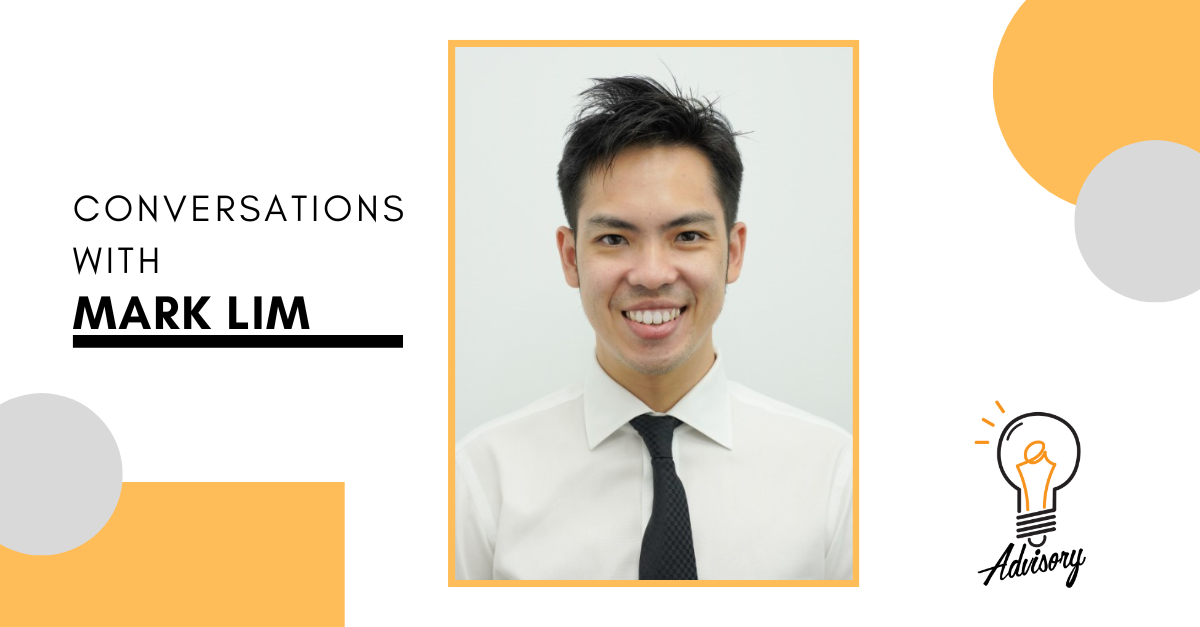
Conversations with Mark Lim
By Caleb Thien and Andre Nyeo
In this article, Mark Lim, Chief Executive Officer (CEO) and co-founder of Aliena, shares what it is like to navigate the space technology sector as an entrepreneur, how he overcame academic setbacks, and his transition from education to corporate leadership. Mark leads the development of advanced plasma propulsion systems for satellites at Aliena, a Singapore-based space propulsion manufacturing company, and has been recognised on the MIT Technology Review list of Innovators Under 35.
Could you introduce yourself, your current roles, and your educational background?
I am Mark, the CEO at Aliena. I also serve as the Chairman of the Institute of Electrical and Electronics Engineers (IEEE) Nuclear and Plasma Sciences Society, an Adjunct Research Scientist at Nanyang Technological University (NTU), and a School Advisory Committee member at Bukit Batok Secondary School. I choose to contribute to these organisations because they represent fields that align deeply with my personal and professional interests.
My educational pathway may seem rather conventional on paper, moving steadily from primary school to secondary school, and subsequently to junior college. However, my transition into higher education was far from smooth. I faced initial rejections from local universities. It was only during my second year of National Service that I was offered a place at the National Institute of Education (NIE), an autonomous institute of NTU, to pursue a Bachelor of Science (Education). I was delighted to be accepted into NTU with an offer to study physics, which was a subject that captivated me.
Following my undergraduate studies, I pursued a Master of Science at NTU, building directly upon my final-year undergraduate project. This eventually led to an offer to undertake a Doctor of Philosophy (PhD) in Plasma Physics, also at NTU. While I performed well enough academically to get by, I always possessed a clarity of purpose that I wanted to dedicate myself to physics. It was the single passion that remained constant throughout my entire educational journey.
What does a regular workday look like for you?
Although I have always felt as though I am in a constant state of firefighting at Aliena, I have managed to build more routine into my work life in recent years. Everything feels urgent, whether it is engineers requesting a component that needs to be procured, calls that must be made immediately, or matters arising from stakeholders and the board. Over time, I have learnt that what appears to be urgent may not always require immediate attention.
Every day, I wear a different hat. Mondays are dedicated to Human Resources (HR), where I manage internships, recruit new employees, or improve our internal processes. On Tuesdays, my focus shifts to engineering, where I oversee production and assess customer satisfaction levels. On Wednesdays, we hold "cookie meetings" after lunch, providing every individual with the opportunity to present the projects they are currently working on. I use this time to learn alongside them, deep dive into the technical details, and ensure that everyone pulls their weight. In fact, I write the meeting minutes myself to gain a clearer picture of the ongoing developments within the company. On Thursdays, I examine business strategy and expansion while keeping up with recent developments in the field. Finally, on Fridays I focus on reviewing finances and procurement-related matters. This thematic approach is what gives structure to my week.
Apart from founding Aliena, you also chair the IEEE nuclear and plasma sciences society as well as a School Advisory committee, and are concurrently an adjunct Research Scientist in NTU. How do all these positions tie together?
Although most of my working hours are spent with Aliena, giving back to the institutions that helped me along the way helps to enrich my life and fill it with purpose. This is why I took on these additional roles outside Aliena. In such roles, I view my responsibility similar to that of a torch bearer, passing it on to the next generation and inspiring them to be the catalysts of change.
Looking back at your past experiences, what led you to start Aliena?
By the end of my undergraduate degree, I remained unclear on what I wanted to do as a career. I thought that I wanted to be a teacher, but my final year project on plasma systems for advanced materials shifted my interest. It was the first time I worked on something where textbooks did not have answers; novel problems where your guess was as good as anyone else’s.
I eventually entered the teaching profession and thoroughly enjoyed engaging with students. They inspired me deeply through their natural curiosity and the rapid manner in which they absorbed knowledge. Nevertheless, my passion for research persisted. Because the terms of my teaching bond did not permit me to pursue postgraduate studies on a full-time basis, I had to juggle my Master's degree commitments alongside my full-time teaching responsibilities.
Following that period, I chose to dedicate myself fully to research by embarking on a full-time Doctor of Philosophy (PhD) programme. I was delighted by the academic freedom to explore various subdomains that excited me, even if they did not strictly align with my primary doctoral thesis. This intellectual flexibility ultimately allowed me to converge onto my true research interests.
In terms of how Aliena came about, space technology had blown under our radar and rarely featured in our research until the 2015 to 2016 period, when a sudden push emerged to develop propulsion systems for satellites within the lab that I was a part of. With the global community anticipating the launch of thousands of small satellites in constellations over the next decade, the space propulsion community identified a clear market gap for low-power, fuel-efficient electric propulsion hardware.
The lab that I was a part of secured a grant to develop this capability in Singapore. At the concluding phases of the initial project, my co-founder and I saw the immense potential of the market and understood the only way forward to drive things at a pace that could be adopted rapidly by the market was through spinning off the ideas we had in our heads through a private company outside the University. The signs were unmistakable and it was an opportunity I could not pass up, and as such we decided to incorporate Aliena to drive the commercial production of systems to enable satellite mobility. Nevertheless, leaving a secure and fulfilling public service job to found Aliena, starting entirely from scratch with no initial funding or guarantees, was by no means an easy choice.
What role does Aliena play in the space ecosystem? Where do you see it headed in the near future?
Singapore’s domestic space market is growing, but it is not large enough to sustain us. Even if we had the entire domestic market to ourselves, it would not ensure our survivability or fund the research and development required to expand our capabilities. That is why we must look beyond our borders; this represents both Aliena’s role and Singapore’s next step. Venturing into the global market brings more than just financial returns, it builds international traction and credibility, allowing us to scale exponentially. For instance, if we establish significant traction and operational heritage in a market such as the European Union, adoption from other regions — including the Middle East, the Asia-Pacific, and even the United States — tends to follow.
At the same time, Aliena remains based in Singapore, with all our research and production anchored here. Should we ever be called upon to develop strategic capabilities, most would tend to think that there are two potential paths. The first is to rely on governmental grants and stakeholders who require products built to specific specifications. Alternatively, young enterprises can grow to a point where they hold sufficient financial reserves, compete effectively on an international stage, and have absorbed best practices from global partners. This latter approach means we would already possess the necessary know-how and the capacity to move quickly without drawing on local resources.
Aliena has been firmly rooted in principles to steer our businesses through the second pathway. The “commercial first” approach forces constraints to guide focus, with a clear eye towards commercial viability to drive innovation in pushing the boundaries. In the other approach, the nation picks up the tab twice; once for the capability, and the other for keeping the organisation alive. We firmly believe that we should be good stewards of capital from our stakeholders. While we recognise the value of governmental grants and stakeholder support, Singapore’s resources are ultimately limited, and we are mindful of not crowding out companies that are just starting out. In short, Aliena needs to move forward independently so that emerging startups coming up behind us have the room to receive the support they require.
How do you think Singapore can better position itself as a space-faring nation?
Singapore should punch above its weight in the space sector, just as it has done successfully in other industries. This is not our first attempt, as several companies have paved the way before Aliena. A prominent example is Addvalue, whose Intersatellite Data Relay System (IDRS) product now flies on most of the world's major Earth observation constellations. It has become a recognised brand that was both developed and first flown from Singapore.
Similarly, we now have the National Space Agency of Singapore (NSAS). However, becoming a true space-faring nation is not an overnight phenomenon, and it will not happen simply because an agency exists. While having an official agency backing us helps greatly, our community has been steadily building these technologies in the background and maturing towards commercial readiness. I see this as an important turning point. Space has become genuinely popular with investors and is no longer viewed as far-fetched, but rather as a commercial domain capable of yielding real financial returns.
What is Singapore’s distinct advantage in the global space market?
Singapore is always looking for ways to expand its economy and create good jobs for Singaporeans in exciting domains. Naturally, space should be one of the areas we explore further, given its potential to bring advanced manufacturing and highly skilled work back to the country. Space represents the pinnacle of engineering. When it comes to hardware development, Singapore stands a strong chance of becoming a serious global player.
Globally, there is a wave of emerging operations and constellations, ranging from early warning missile networks to precision navigation systems, all of which require satellites to be launched. However, launching satellites is only the visible end of the value chain: behind every constellation sits a layer of hardware enablers that make these missions possible in the first place. As an analogy, AI thrives on data centres, microchips, and memory, and the space sector depends on a similar layer of foundational enablers.
On why Singapore is uniquely positioned, competitors abroad are increasingly being acquired by defence and aerospace primes looking to vertically integrate their supply chain. These firms are often reluctant to sell critical technological products to external entities that could empower potential rivals. The European Union, meanwhile, is searching for propulsion systems for its own programmes. If Singapore can produce these components free from restrictive export controls, while remaining private and independent during global consolidation, we can serve the wider commercial market rather than just governmental or strategic buyers. This represents a genuine market gap that can bring high-quality jobs and economic growth to Singapore.
What skills are important in your line of work?
The most important skill is logic, particularly the ability to construct sound arguments and engineer systems. Numeracy and basic arithmetic matter just as much, since they cut across every domain, from the hard sciences and engineering to finance and even fields that appear non-mathematical. Knowing how to manipulate numbers sharpens your ability to think logically and tackle problems from an engineering perspective.
A less talked about but equally important skill is comprehension and language ability, things you pick up through project work, General Paper, or English in school. This matters because we are living in a time when textbooks alone cannot keep pace with technological advancement; by the time a textbook feels outdated, you are likely already pushing the boundaries of your field. Comprehension helps you make sense of what is happening on a daily basis, including in the tech community. Being able to engage and communicate effectively with stakeholders, whether in product development or business, will always matter.
What important technical skills do you feel cannot be acquired in a university?
I believe many of these practical skills are acquired not through a university curriculum, but through hands-on internships. It is important for students to get their hands dirty by going beyond basic soldering, assembling parts on a pre-designed circuit board, or creating a Computer-Aided Design (CAD) model from an instructional template. True technical competence means stepping up to handle the full pipeline, designing something from scratch, sourcing components from the relevant vendors and testing the prototype.
The same principle applies to software development. With the recent popularity surrounding vibe-coding, it is tempting to think you can build software without truly knowing how to program. However, writing code is one thing, maintaining it over time and ensuring it integrates seamlessly with the right interfaces is another. Without a deep understanding of the underlying software architecture, you have no way to upgrade it. It will eventually break, forcing you to start from scratch, which is not a viable option for a business built around that infrastructure.
I encourage individuals to learn to code from the ground up to understand the entire logical architecture. Relegating that task entirely to AI deprives you of learning the logic behind it, and that logic is itself a highly translatable skill. Some of the best coders I know were originally trained as lawyers, not just because of their rigorous application of logic, but because cross-referencing legal documents trains you to build complex systems where each individual part depends heavily on the others.
If there is one piece of advice that you can share with current youths thinking of entering the same job role that you are in, what would it be?
As with anything in entrepreneurship, success starts with identifying a real problem and committing to solve it. If you are drawn to space, do not stop at a general interest. You should dig deeper into what specifically pulls you in. Ask yourself: What keeps you up at night? What do you notice is missing from the market? Why has no one solved this particular issue yet?
Once you have identified that gap, go down the rabbit hole. Chances are, there are already enablers and adjacent players working on related problems; seek them out, and learn from the ground up. When something has not been done before, there is no shortcut; you have to figure it out yourself.
What keeps you up at night?
It would be the environment my children will grow up in. I hope that my work in Aliena will produce something that they can inherit. I do not mean this in terms of finances, but the kind of jobs through the ecosystem we are building that will be available for them to find and pursue their passion in life.
I frequently think about how we can best prepare not just my own children, but the wider community for the future, ensuring it is a landscape that can accommodate their aspirations. Crucially, I believe Singaporeans must remain “hungry” and establish the right ecosystem so that the nation can truly thrive, rather than only survive.